

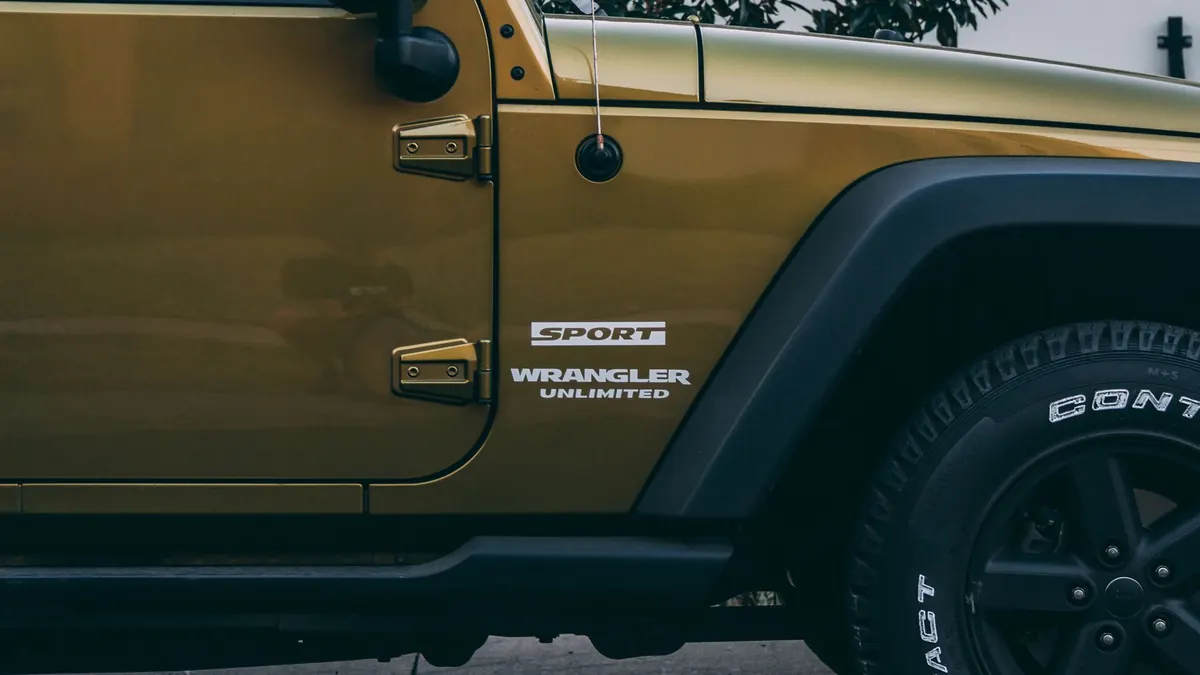
Tyres are the only part of a drift car that touches the track, and usually the last thing anyone thinks about. You can have the angle kit, the welded diff and the turbo, but if the rear tyres are inconsistent, overheating or falling apart, you'll spend the day fighting the car instead of driving it. Tread, compound and pressure each change how a car breaks away, how quickly it comes back, and how long a set lasts. Here's what actually matters, and what tends to work at UK venues.
Tread: grooves cost grip, and that is sometimes useful
Tread blocks and grooves exist to move water away from the contact patch. On a dry circuit they do almost nothing for you: less rubber on the ground, blocks squirming under load, and a tread that runs hotter than a smooth one. That's the whole reason race slicks exist.
For drifting, a bit of tread isn't a bad thing. It gives a slightly softer, more readable breakaway, and it keeps you legal if you're driving to the venue on the same set. In the UK, cars must run at least 1.6mm of tread across the central three-quarters of the tyre around the whole circumference. If the car is road-driven, that's your hard floor, and it's worth checking the current requirements yourself rather than taking someone's word for it in the paddock.
What most people actually run in the dry is a mix of part-worns and cheap road tyres. That's a sensible way to buy seat time. Just be picky about consistency — a matched pair of mid-range tyres will teach you more than two mismatched exotica.
Compound: what the label won't tell you
Compound is the rubber mix, and it decides how a tyre behaves once it's hot.
- Soft compounds bite earlier and at lower temperatures, but wear fast, overheat quickly, and can chunk — tearing blocks off the tread surface — when pushed past their window.
- Hard compounds need more slip and more heat before they grip. They last longer and run cooler, which is why they suit practice days and long sessions.
- Winter tyres feel soft in the hand but are built for cold, wet roads. On a warm track day they overheat, go greasy and can delaminate. Fine for a damp airfield, risky in a dry summer session.
Treadwear ratings are worth a glance, but don't treat them as gospel. They're declared by the manufacturer, so they're useful for comparing tyres inside one brand's range and much less useful across brands. Two tyres both marked 300 can behave completely differently.
The trait that matters most for drifting isn't peak grip, it's predictability. A tyre that loses grip smoothly and recovers the same way every time is worth more than one that grips harder but snaps.
Pressure: the dial to touch every session
Pressures rise as a tyre heats, and a rear tyre doing constant work will gain several psi over a run. The pressure you set cold is not the pressure you're driving on. Check cold, then check again the moment you come in, and note the difference — it tells you how hard the tyre is working.
Broadly:
- Lower pressure means a bigger, softer contact patch: more grip, more sidewall flex, more roll, slower steering response, and more heat building in the sidewall.
- Higher pressure means less grip and a sharper, more sudden breakaway. The tread runs cooler but the shoulders take more load and wear faster.
Most drifters want grip at the front for steering feel, and a tunable amount at the rear. Start from what you ran last time at that venue and adjust in steps of about 2 psi, one change per run. If the rear feels vague and lazy, add a little. If it's snappy and the shoulders are cooking, take some out. Use the same gauge all day — two gauges can read a couple of psi apart, which is enough to make your notes useless.
What tends to work on UK circuits
UK drift venues are usually short, technical and mixed in surface: old airfield concrete, proper asphalt, abrasive patches, and kerbs that will happily take a chunk out of a sidewall. Add the weather and you're often dealing with a damp or drying track rather than a fully dry one.
That pushes you towards two things. First, carry a wet set with real tread — part-worns at 3–4mm will out-drive a bald set in the damp every time, and they'll keep you safe on the drive home. Second, keep a dry set you're happy to bin, because on abrasive surfaces you'll go through rubber faster than you expect.
Check the venue's rules before you load up. Some circuits restrict what you can run, and some have tyre fitting on site, which changes what's worth bringing.
Reading a tyre tells you what to change
Wear patterns are feedback. Learn to read them before you throw a set away:
- Both shoulders worn more than the centre — pressure too low.
- Centre worn more than the shoulders — pressure too high.
- Torn or chunked blocks — overheating, or a compound too soft for the surface.
- A glossy, bluish surface — the tyre has gone off. Let it cool and it will often come back.
- Cupped or feathered edges — usually alignment or suspension, not the tyre.
- Scuffed sidewalls, bubbles or visible cords — retire it. A sidewall failure at speed isn't worth the entry fee.
Two tricks worth knowing. Flipping a tyre on the rim lets you use the inner shoulder once the outer is gone, which roughly doubles the life of a set. Rotating tyres between sessions spreads the wear — mark them with chalk so you know where each one has been.
Your next drift day: a short checklist
- Inspect every tyre before you load up: tread depth, sidewalls, no cords, no bubbles. If you're unsure whether a tyre is safe, ask a tyre specialist rather than guessing.
- Set pressures cold, write them down, and note the ambient temperature.
- Check pressures hot after your first run and adjust in 2 psi steps.
- Pack a gauge, a pump, a chalk pen and at least one spare pair.
- Record what you ran, where, and how the car felt. A few events of notes will teach you more than any forum thread.
- Store spares out of direct sunlight, stacked upright and away from oil.
Get the basics right and the rest of the car gets easier to drive. Consistent tyres let you feel what the suspension and the diff are doing — and that's where the real lap time lives.
Photo: Matthew Barra / Pexels