

A drift day becomes a good story when the car survives and you drive it home. Tyres, camber and a stack of spare wheels get all the attention, but the kit you wear is what matters when the back end steps out further than you planned. Safety gear is not the place to improvise, and the entry point is more reachable than most beginners expect once you know what you are looking at.
What UK drift events actually require
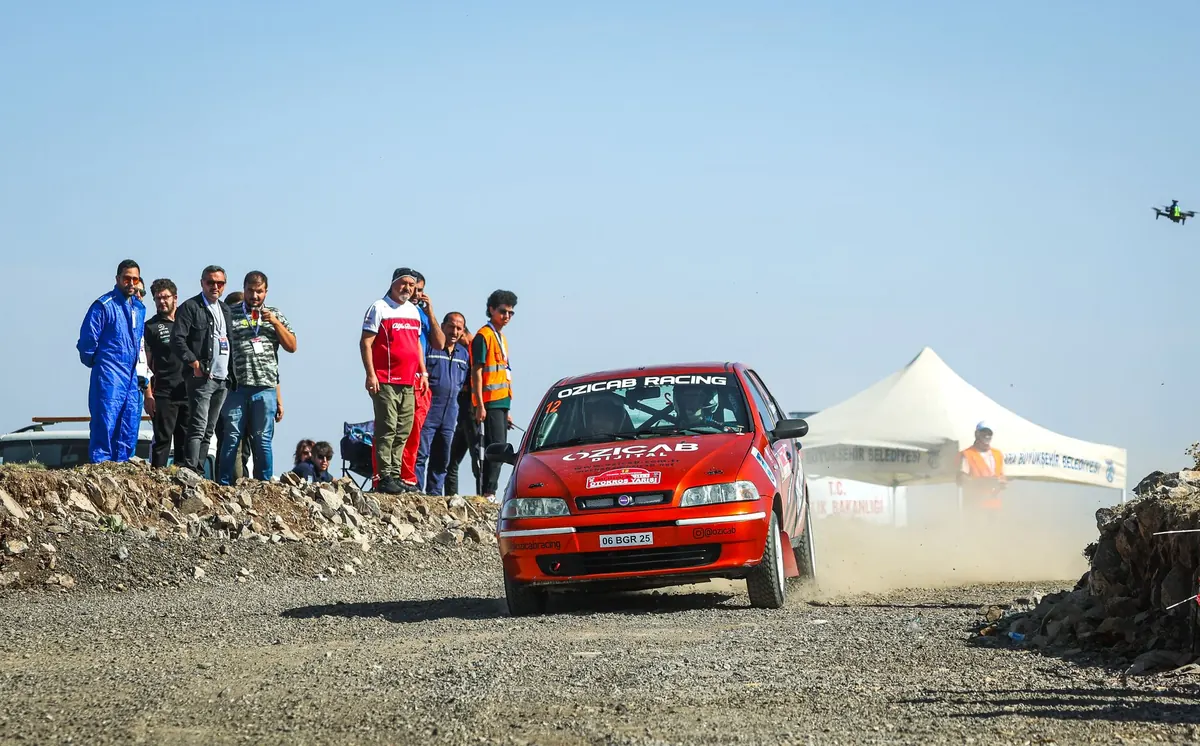
Requirements vary more than people assume. A grassroots practice day at an airfield often asks for a helmet, long sleeves and no loose clothing. A championship round or an event run under a Motorsport UK permit will ask for far more: an approved helmet, a proper harness, fire-resistant clothing and, in some cases, a frontal head restraint such as a HANS or hybrid device.
So before you buy anything, read the supplementary regulations for the specific event. Every championship and venue publishes them and they take ten minutes to scan. Turn up in kit that does not meet the list and you will be watching from the spectator bank. Scrutineers check labels, not good intentions — if the standard is not printed on the product, assume it will not pass.
Helmets: certification and fit
For competition, look for FIA 8859-2015 or Snell SA2020. Older FIA and Snell approvals may still be accepted depending on the regulations, but standards roll over and organisers eventually follow. Many practice days also accept a current motorcycle helmet to ECE 22.06, which is a reasonable starting point if you are only doing a few track days a year — just confirm it with the organiser first.
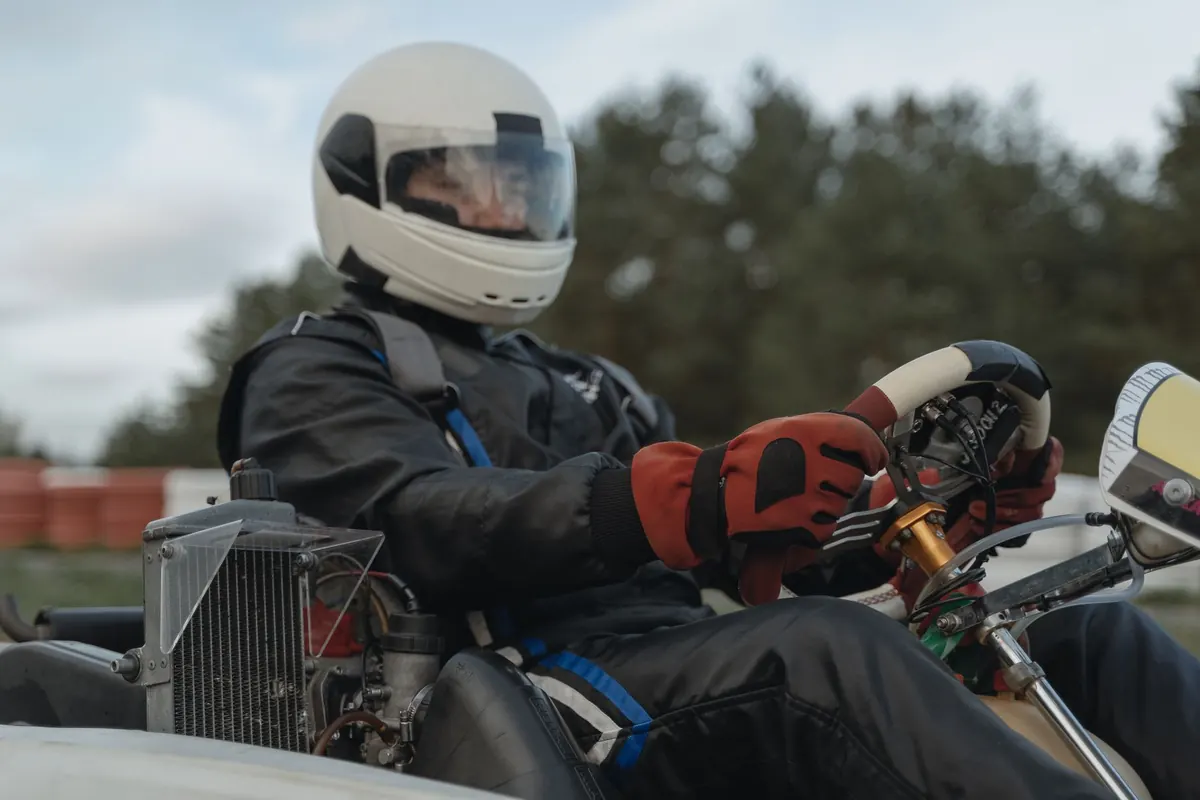
A full-face helmet with a visor is the sensible default. It protects your face from smoke, rubber debris and any under-bonnet fire, and it keeps the wind out at speed. Open-face lids are still common at grassroots days and they are cooler to wear, but they leave more of you exposed.
Getting the fit right
- Push the helmet side to side. Your scalp should move with the shell, not slide around inside it.
- Cheek pads should press without pinching. If you can properly chew your own cheek, go up a size; if you can turn your head inside the helmet, it is too loose.
- It must not roll forward over your brow or backwards off your head.
- Wear it in the shop for twenty minutes. If you get a headache in that time, it will be unbearable after a full session.
Replace a helmet after any impact, even a drop onto tarmac. Manufacturers generally suggest replacing after roughly five years of use, and sooner if it has been cooked in a hot car or soaked in sweat every weekend. Store it out of direct sunlight and never leave it loose in the boot.
Harnesses: more than a strap
Look for FIA 8853-2016. Beyond the standard, the number of points matters. A four-point belt has lap and shoulder straps; a five- or six-point adds crotch straps that stop you sliding under the lap belt in a frontal impact. In drifting, where you are being thrown sideways all day, that extra restraint is worth having.
Mounting is where home installations go wrong. Follow the manufacturer's angles, keep shoulder straps as short and as close to horizontal as practical, and never run them steeply down behind the seat where they can compress your spine in a crash. Bolt-in points need reinforcement or spreader plates underneath — a washer on thin sheet metal is not enough.
Check the label before you buy. FIA-approved belts are generally accepted for five years from their date of manufacture, so a cheap second-hand set may already be out of date for competition. Replace belts after a heavy impact and inspect regularly for fraying, stiffness and damaged stitching.
Adjust everything while you are sitting in the seat with your helmet on, not standing beside the car. The belts should be tight enough that you cannot twist the webbing between finger and thumb, but loose enough to breathe and reach the wheel. Shoulder straps sit on the collarbone, not the neck.
Fireproof clothing: layering beats one thick suit
FIA 8856-2018 is the current standard for suits, gloves, boots, balaclavas and underwear, and some regulations also accept SFI 3.2A/5. A single-layer suit that meets the standard, worn over flame-resistant underwear, does much the same job as a bulky multi-layer suit at a lower price and with less heat stress in a car with no air conditioning.
What you must not do is wear polyester sportswear underneath. Synthetic base layers melt onto skin, which is exactly the outcome fireproof outerwear is meant to prevent. Cotton is better; purpose-made flame-resistant underwear is better still.
- Suit fit: loose enough to leave an air gap, with sleeves long enough that your wrists stay covered when your arms are out at the wheel. Too tight is a common beginner mistake.
- Gloves: thin, snug and pre-curved so you can work the handbrake and release the wheel. Check they do not bunch in the palm.
- Boots: thin soles give far better clutch and pedal feel than trainers; mid-height boots add ankle protection.
- Balaclava and socks: cheap, and they protect the parts of you a suit leaves exposed.
Where to spend and where to save
Two items deserve your budget: the helmet, because fit and condition matter more than the graphics, and the harness, because it holds you still through every transition. The rest you can shop sensibly.
- Buy last season's colours or an entry-level approved line from an established brand — the standard on the label is identical.
- Second-hand suits are usually fine if the stitching is intact and the standard is printed inside; second-hand helmets are a gamble because you cannot inspect the liner for impact damage.
- Skip unbranded "racing style" bargains online. No standard, no use.
- Ask the regulars at your local venue where they buy. They know which shops and scrutineers are helpful.
Your pre-drift-day kit check
- Read the regulations for your event and note the exact standards required.
- Helmet: clean visor, no cracks, straps and buckles in good order, spare visor or anti-fog if it is damp.
- Harness: in date, correctly routed, bolts checked with a torque wrench.
- Clothing: suit, gloves, boots, balaclava, socks, plus a spare set for a wet afternoon.
- Water, shade and somewhere dry to store the gear between runs.
Regulations change, so check the current Motorsport UK yearbook or the event's own paperwork rather than a forum thread from three years ago. If you have an injury or condition that affects how you sit in a harness or wear a helmet, speak to a doctor and to the event scrutineer before the day. Good gear will not make drifting safe — nothing does — but it removes one set of worries and lets you concentrate on the throttle.
Photo: Tima Miroshnichenko / Pexels